I understand this blog may be long for some readers, but please, humour me. I wrote this question as part of my participation in the final class of my Creative Writing Certificate (it was a requirement to lead a discussion post). Though my question met with hostility from some, my instructor, Vivian Hansen, using Rupi Kaur’s Milk and Honey as an example, added a very thoughtful response. It influenced my answer below, which has been slightly edited for context in this blog.
Though you, my dear reader, will not see my instructor’s response, I hope I have contextualized the post accurately for everyone who was not part of the original discussion and have made this essay blog coherent.
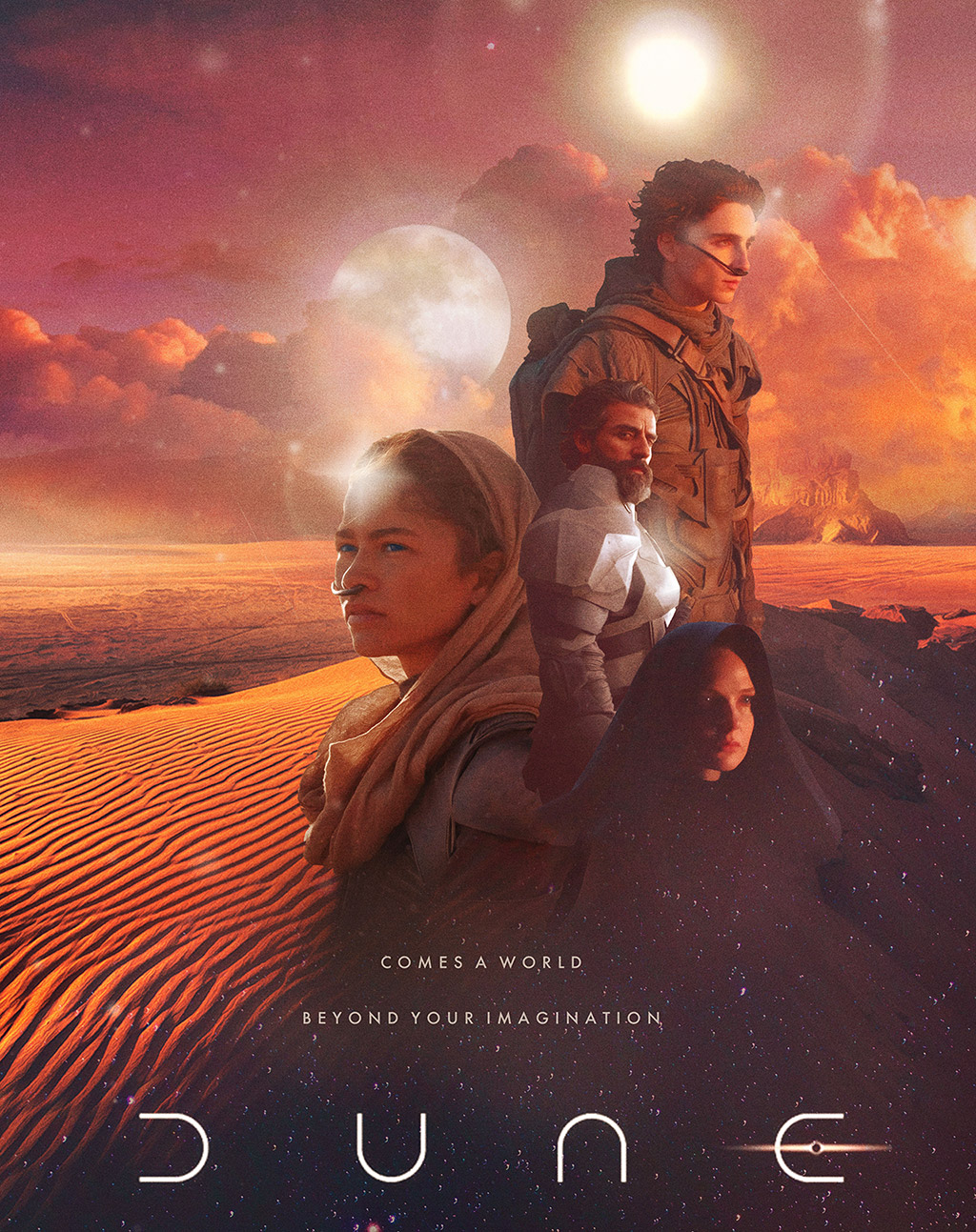
In the introduction to Frank Herbert’s Dune, Neil Gaiman wrote about the Science Fiction or Speculative Fiction (SF) writers in their present time:
“What writers of science fiction and of the fantastic do is write about ourselves—all writers do. We write about what we see and what we think and what we fear and what we hope. What we do not do when we write SF is attempt to predict the future, and even if we accidentally somehow do describe the Shape of Things to Come, we don’t score points by getting it right.
“Even so, perhaps we might make futures, or help futures to come into existence, or warn the world and the people reading away from dangers that wait ahead like wolves in the deep woods. Because whatever we think we are doing when we write, we are actually writing about our present. What we write is always, will always be, a reflection of its time, like the cosmetics and hairstyles in movies that are invisible to the people watching when they first come out, and then date them forever.
“As the times change, what we have written changes too, even if the actual words on the page stay the same. A 1950s future tells us more about the fears and hopes and dreams of the 1950s than it will ever tell us about the future.”
Herbert, Frank, and Neil Gaiman. “Series Introduction.” Dune, Penguin Books, New York, 2016, pp. XII. ISBN: 978-0-14-311158-0.
Though Neil Gaiman’s discussion is specific to the SF genre, do you think his idea of what writers write translates past genre fiction to all forms of fiction and non-fiction writing? In the background of your own writing, are you writing about the things you see, think, fear and hope? Does it matter to your work, or can it exist without it?
One of the reasons Neil Gaiman’s words caught me off guard was because, as I read it, I realized that I didn’t think I was paying attention to the human condition (which is the wording I think my instructor used better than I did). There was an idea that I wanted to write about, a situation. Still, I became easily lost in writer’s block. What I forgot or wasn’t inspired with in my writing was the lack of consciously knowing that I, like all writers, am writing my reflection on the human condition, what it means to me and the influence I’ve received from external sources. It made me think of the pertinence of honesty with the characters, the story, and the ‘self.’ As a basis of logic, the obvious question is, if one does write about the human condition, can one write without it? If one can, is the substance as savoury to the reader as it would be with writing about our hopes, fears, dreams, etc.?
Neither writer comes at writing the same as any other writer, nor should they. This is all a part of our journey. Each writer has different realizations and speeds at which they come to their understanding. It’s one of the reasons we are all here taking a certificate program to help us with questions and thoughts to move us along the practice of our craft.
The first time I saw Milk and Honey by Rupi Kaur, it wasn’t the poet’s name or the book’s title that grabbed my attention. It was the idea of inclusion, and wondering if my wife would appreciate this book because they share ‘Kaur’ as part of their names. I’m glad for Rupi Kaur’s success, and it was interesting how my instructor pointed out the sales of Rupi Kaur’s book as part of the ‘gift economy’. Considering she’s a household name, it was shocking to learn that she was criticized for poor poetic craft. I know I’m not one to understand poetry, but I recall flipping through her book reading entries and thought it was truthful and vulnerable. The vulnerability was something I could relate to at the time being a Zumba Instructor—the audience sees your flaws and is either unforgiving or accepting. I also thought about how my wife could relate, coming from the same culture and seeing the faults which existed that were expressed in Milk and Honey.
I believe my instructor reflected the heart of the question in her response.
“The essence of Humanities Research is to qualify, not to quantify.”
I must admit I had never considered the idea of Humanities research and how challenging it is to quantify qualitative works. The subjective analysis within the genres of Sci-fi and Fantasy, and perhaps all genres, is true in how it speaks to the hearts of those that read them. To listen only to the voice of the author or the voice of a character is perhaps missing out on the message to readers or the importance the story has to their lives at the moment in time they read it, qualified by them.
In Rupi Kaur’s case, it wasn’t voice that struck me, it was something that I saw we shared, and that was the vulnerability that I had at my point in time. I know that I’m not expressing her messages of what she experienced, and some people could be offended that I would attach myself to this example. I would say that it’s the idea of the human condition that I’m talking about.
On another note, I think this is why I veer towards Science Fiction and Fantasy for my writing and my choice of reading. The SF genre validates something significant in me for my own experiences, my loves, flaws, hopes, fears and dreams. Whether I can consciously place it and put it in words, or if it is something in the background that comforts me with a resonance of understanding and expressing feelings that I cannot put into words. Like someone understands me and, in that written work, for the briefest of times, values me as a person.
How my instructor responded not only got me to think more about myself as a writer but to go deeper and try and put into words something that is felt and unseen and challenged me to understand myself in my writing.
Thanks,
Mike


Leave a Reply